
Elgin Economic Outlook: Signs of Recovery, Opportunity and Change Ahead

Elgin Economic Outlook: Signs of Recovery, Opportunity and Change Ahead
Business Growth, Competitive Advantages and Emerging Opportunities in Elgin, Illinois
Elgin Economic Outlook: Signs of Recovery, Opportunity and Change Ahead
The economic picture heading into the final months of 2026 is mixed, but there are encouraging signs for businesses in the Elgin area. A recent Business Banking Insight prepared by Bank of America for the Elgin Area Chamber of Commerce points to improving national growth, a stable labor market and a gradual recovery for the local economy.
National Growth Expected to Strengthen
Bank of America expects U.S. economic growth to average approximately 2.5% during the second half of 2026, compared with 1.8% during the first half of the year. Consumer resilience, stronger hiring and continued investment in artificial intelligence are helping support that outlook. At the same time, inflation remains a concern, with core inflation expected to remain above 3% during 2026 before easing further in 2027.
The labor market also remains relatively stable. Bank of America projects the national unemployment rate will finish 2026 at approximately 4.2% and remain at that level in 2027.
Elgin Positioned for a Gradual Recovery
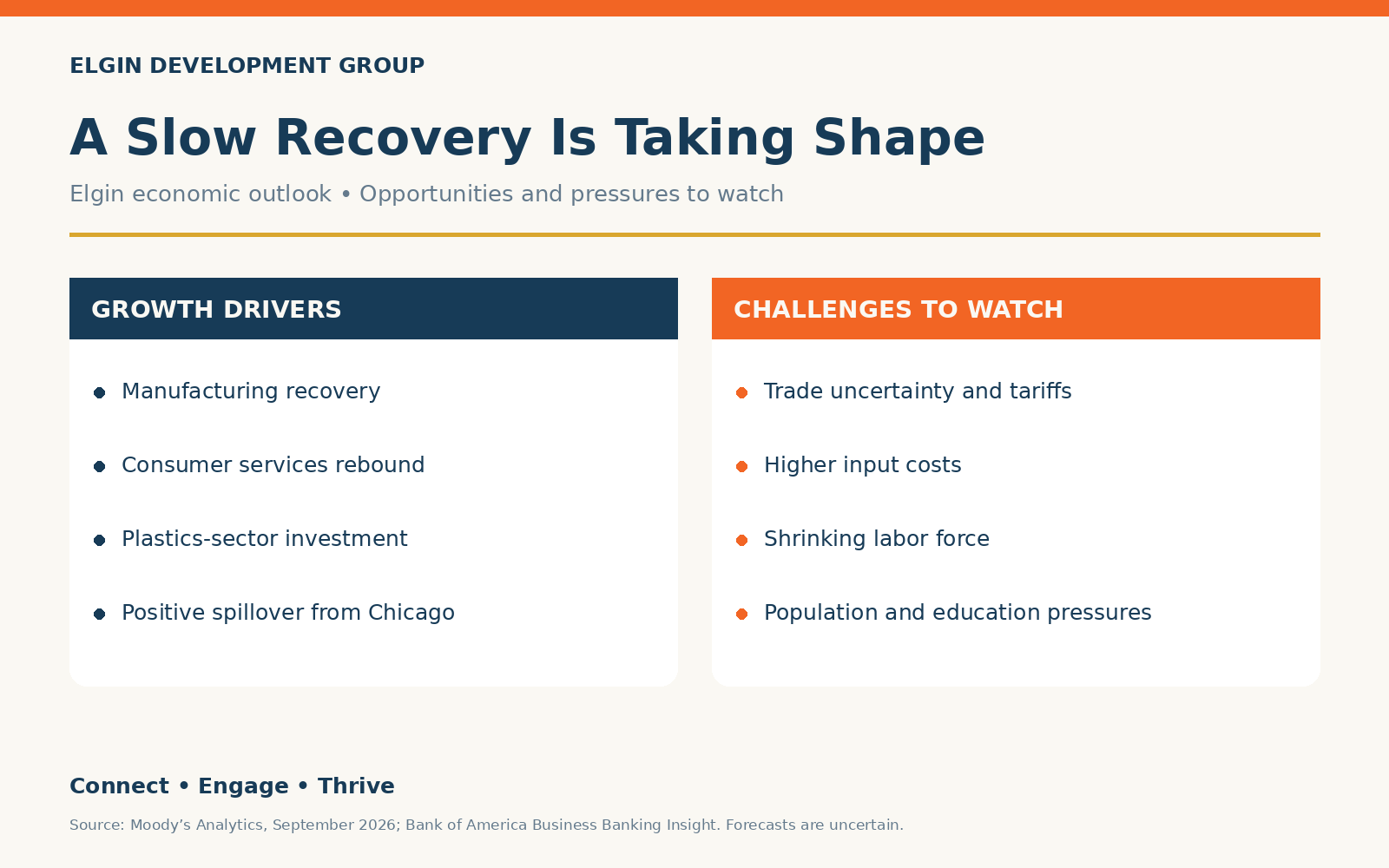
Closer to home, the outlook suggests that Elgin's economy should begin a slow recovery in the coming quarters.
Manufacturing and consumer services are expected to strengthen, and Elgin's established industrial base could help the region outperform some peer markets. Investments in the plastics sector are expected to support modest manufacturing and employment growth, although tariffs, trade uncertainty and higher input costs remain risks.
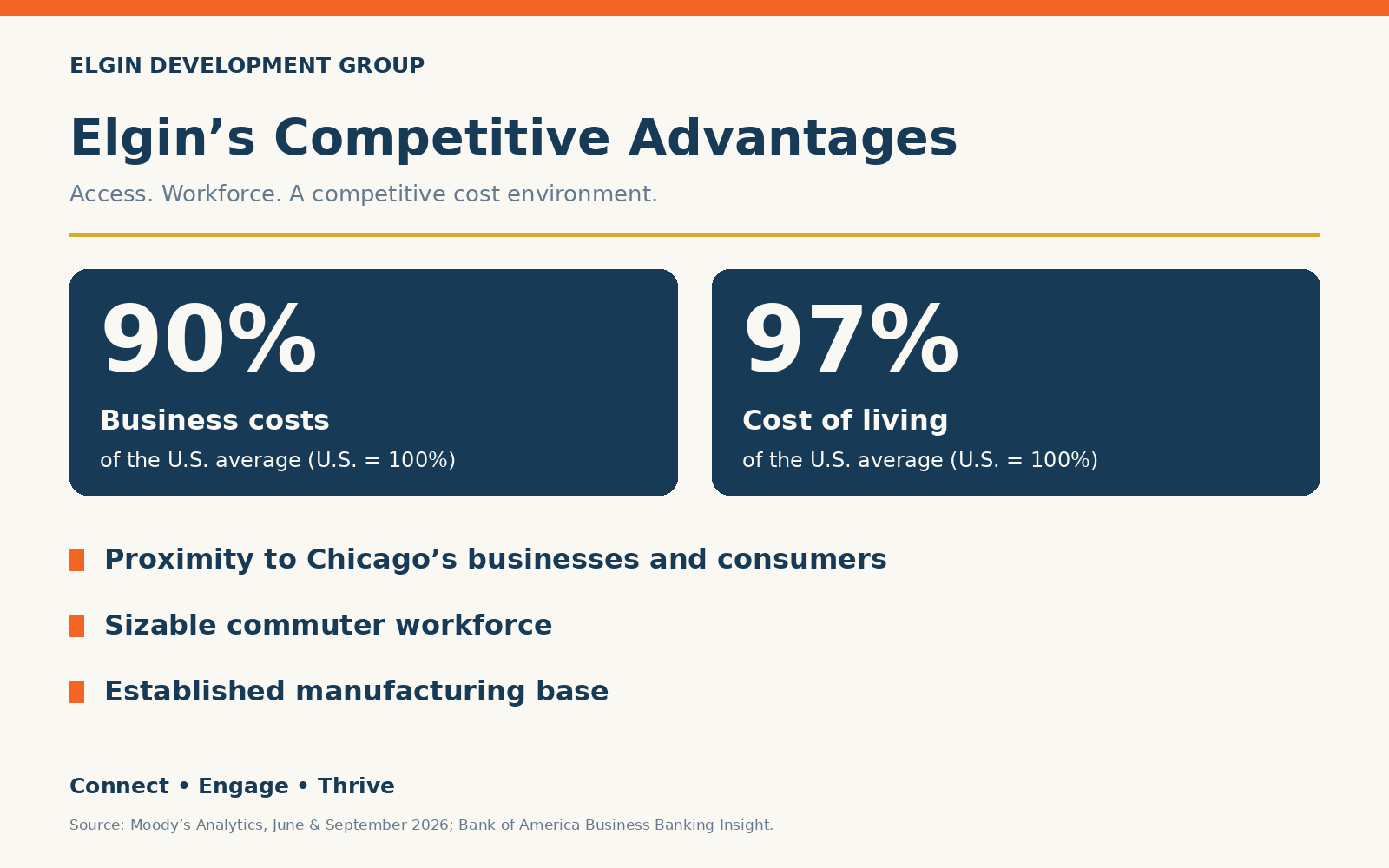
Longer term, Elgin is expected to benefit from its proximity to Chicago. Among the area's identified strengths are its access to Chicago's businesses and large consumer base, sizable commuter workforce and relatively low cost of doing business. Elgin's business costs are estimated at approximately 90% of the U.S. average.
The forecast also anticipates continued economic expansion over the longer term. Gross Metro Product is projected to increase from approximately $38.9 billion in 2026 to $43.4 billion in 2031, while total employment is projected to rise from approximately 293,000 to 300,000.
Technology Is Changing How Organizations Operate
One of the strongest themes throughout the report is technology—particularly artificial intelligence.
For nonprofits and associations, AI is increasingly being used to automate administrative work, personalize communications, analyze data and strengthen donor and member engagement. Cloud technology, data analytics and cybersecurity are also becoming increasingly important to organizational efficiency and competitiveness.
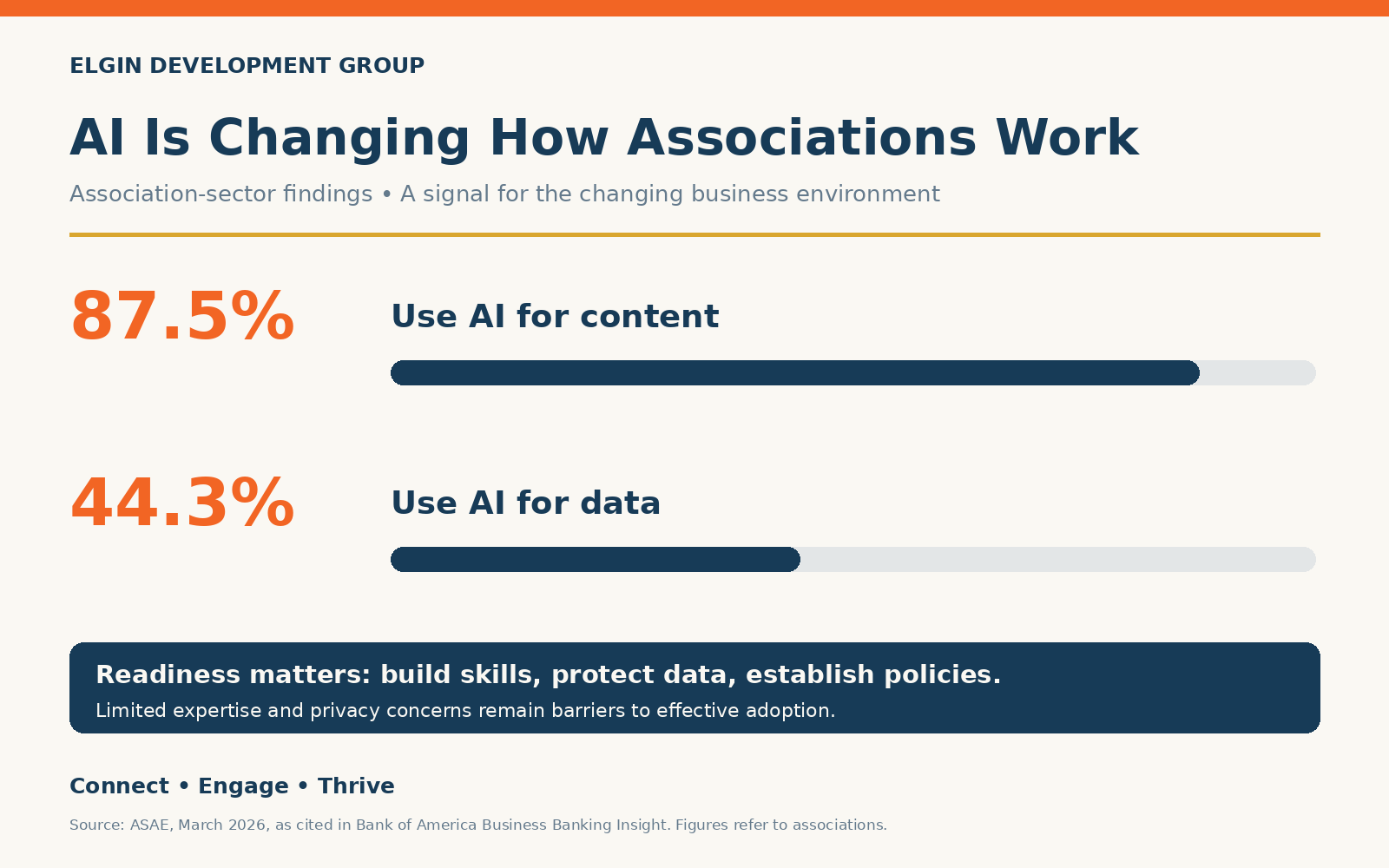
The shift is especially relevant to membership organizations. The report cites research showing that 87.5% of associations are already using AI for content, although many organizations still lack the expertise, policies and governance needed to use the technology effectively.
At the same time, members increasingly expect the same seamless digital experience from an association that they receive from other services—from joining and renewing online to registering for events and accessing information from a mobile device.
Membership Organizations Face a Changing Value Proposition
The research also highlights challenges that should sound familiar to chambers and other membership organizations.
Retention and engagement remain a leading concern, while meeting attendance and traditional revenue sources are under pressure. In response, associations are exploring partnerships, developing new offerings, diversifying revenue and investing more heavily in membership, marketing and technology.
The takeaway is significant: organizations can no longer assume members understand the value of belonging. That value must be visible, relevant and easy to access.
How the Elgin Area Chamber Delivers Member Value
At the Elgin Area Chamber, membership value comes to life through opportunities to Connect, Engage and Thrive.
Members can expand their visibility by sharing news, events and promotions through the Chamber’s website and Click & Connect newsletter—a benefit included at every membership level. Networking events and educational programs help members build relationships, exchange ideas and connect with resources that support their businesses.
Through the Elgin Development Group, businesses also have access to economic development support to help navigate challenges and explore growth opportunities.
Make your membership work for you. Share your business news at post@elginchamber.com, attend an upcoming event or contact the Chamber to explore the resources available to your business.
What Does It Mean for Elgin Area Businesses?
The outlook isn't without challenges. Higher borrowing costs, inflation, workforce constraints, trade uncertainty and changing consumer behavior will continue to influence business decisions.
But the report also points to opportunity.
Elgin retains important competitive advantages: proximity to Chicago, an established manufacturing base, comparatively favorable business costs and a diverse economy. At the same time, technology and AI are creating new opportunities for businesses and organizations willing to adapt.
For the Elgin Area Chamber and Elgin Development Group, the findings reinforce the importance of helping local employers connect to resources, engage with one another and prepare for the changes shaping the economy.
As 2027 approaches, businesses that remain informed, invest strategically and embrace new ways of working will be better positioned to take advantage of Elgin's next chapter of economic growth.
Connect. Engage. Thrive.
Source: Bank of America Business Banking Insight prepared for the Elgin Area Chamber of Commerce, September 2026, incorporating economic and industry research from Bank of America Global Research, Moody's Analytics and other sources.